Three Brothers Houses in Riga
Share
The Three Brothers Houses – known in English as Three Brothers Houses – is Riga's oldest preserved residential complex and one of the most fascinating architectural testimonies to the city's medieval past. The three adjoining houses from the 15th, 17th, and 18th centuries tell the story of Riga's development over 300 years. Here's everything you need to know about a visit.
Quick Facts
- Address: Mārstalu iela 17, 19 and 21, Rīga
- Built: The oldest house c. 1490, the other two from the 17th and 18th centuries
- Recommended visiting time: 30-60 minutes exterior – longer with museum
- Entrance: Free to view from the outside – Latvian Museum of Architecture inside
- Best for: Architecture lovers, history enthusiasts, photographers
Why visit the Three Brothers Houses?
The Three Brothers Houses are unique in the Baltics. Nowhere else will you find three medieval townhouses from different periods standing side by side in such a well-preserved state. The houses provide a unique insight into how Riga's wealthy citizens lived from the Middle Ages until the Enlightenment.
The oldest house – the white house from approx. 1490 – is the oldest preserved stone house in Riga at all. The facade with its characteristic gable dormers and narrow windows is an iconic sight in Old Town.
What to see?
The White House (No. 17)
The oldest of the three houses is built in late Gothic style and is characterized by its white facade, narrow windows, and prominent gable. The house was originally a storage room on the ground floor with living quarters above – a typical medieval townhouse type.
The Yellow House (No. 19)
Built in the 17th century in Renaissance style with a wider facade and larger windows than its neighbor. Note the decorative details above the windows and the distinctive entrance portal.
The Green House (No. 21)
The youngest and most ornate of the three houses from the 18th century reflects the more lavish aesthetic of the Baroque era. The facade is richly decorated and beautifully contrasts with its two older neighbors.
Latvian Museum of Architecture
The houses now house the Latvian Museum of Architecture, which presents Riga's architectural history. An indoor visit provides a deeper understanding of the buildings' history and construction.
Practical tips
- Best time: Early morning for quiet streets and good light for photography.
- Photography: The street is narrow – use a wide-angle lens or take photos from the opposite side of the street.
- Museum: Check opening hours in advance – it's not always open to tourists.
- Combine with: Swedish Gate and Powder Tower are a few minutes' walk away.
- Cobblestones: Mārstalu iela is cobblestoned – choose shoes with good cushioning.
Suggested route (2-3 hours)
- Start: The Three Brothers Houses – exterior viewing and photography
- Stop 1: Possibly an indoor visit to the Museum of Architecture
- Stop 2: Swedish Gate (a few minutes' walk)
- Stop 3: Powder Tower
- Finish: Back to Dome Square via the narrow side streets
Shoe recommendation
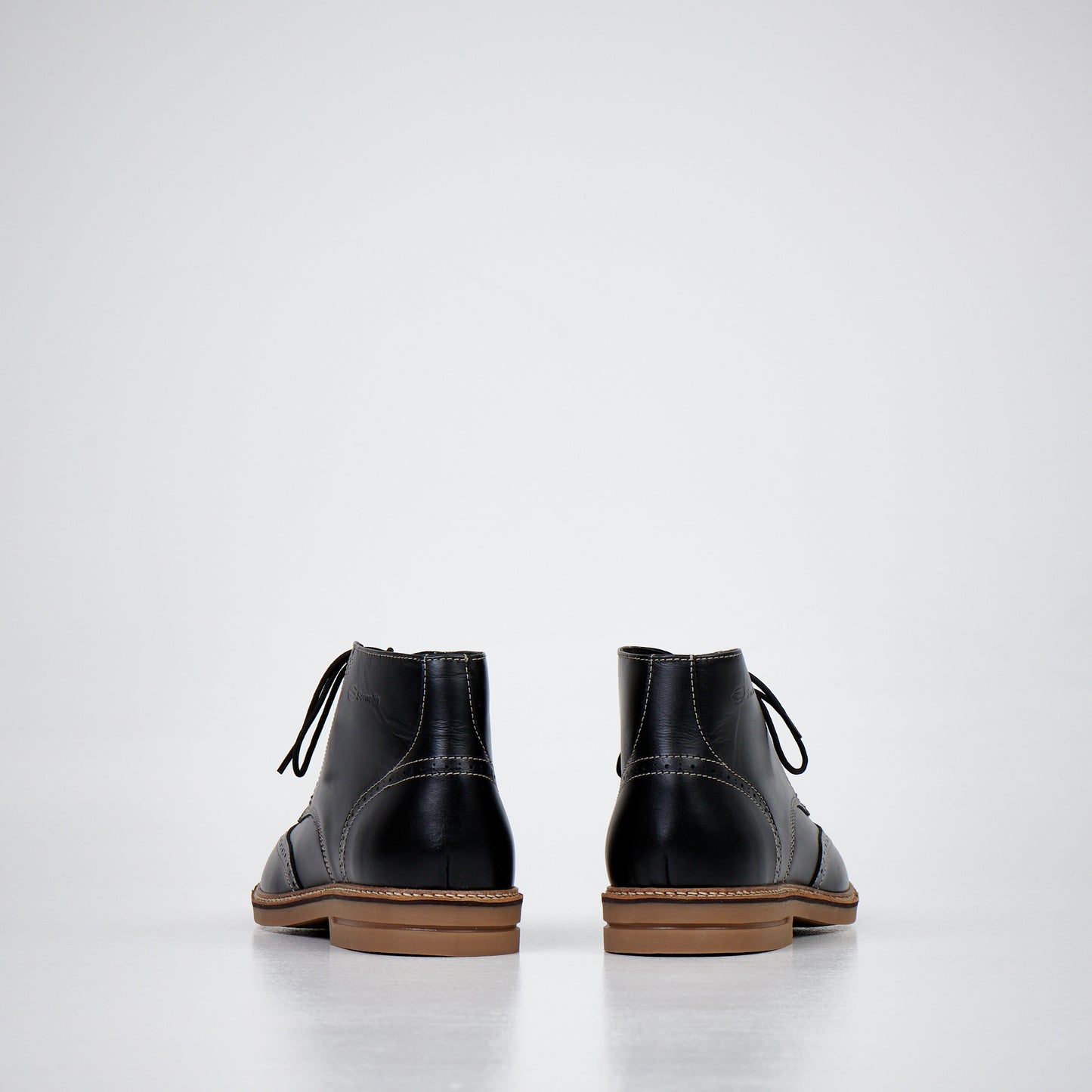
The cobblestone streets of Old Town require shoes with good cushioning and stable soles. At Baltic Shoes, you'll find handmade Baltic shoes in premium leather – perfect for a day in Riga's Old Town.
Frequently Asked Questions
Can you go inside the houses?
The Latvian Museum of Architecture is housed in the buildings and is open to visitors – check current opening hours online. The residential parts themselves are not publicly accessible.
Are the Three Brothers Houses really from the Middle Ages?
The oldest house (No. 17) is dated to approx. 1490 and is thus over 500 years old. It is the oldest preserved stone house in Riga.
Why are they called "The Three Brothers"?
The name is popular and describes the three houses standing close side by side like brothers – it is not a historical name from the time of construction.
Conclusion
The Three Brothers Houses are one of the most authentic and well-preserved places in Riga's Old Town. Whether you are an architecture enthusiast or simply curious about the city's history, a stop here is an experience that puts Riga's past in perspective. Bring your camera and allow plenty of time to explore the surrounding streets.